Category: Lens Reviews

Reviews of lens, old and new. I focus on using lens for Nikon bodies

  • Nikon Z 35mm f1.4 Review. Is it Worth buying?

    Nikon Z 35mm f1.4 Review. Is it Worth buying?

    Nikon Z 35mm f1.4 mounted on a Nikon Z7II, top view

    When Nikon announced the Nikon Z 35mm 1.4 for their mirrorless bodies, I was pleasantly surprised.

    First, everything thought that the Nikon Z 35mm 1.2 would be the brighter lens of the 35mm series, after the excellent Nikon Z 35mm 1.8 S, known for its excellent sharpness wide open. Suddenly, we had a relatively affordable Nikon 35mm that was f1.4, even brighter than the S series lens!

    Naturally, I wanted to get one to replace my old Sigma 35mm f/1.4 Art for the F mount. I have been using that with the FTZ adaptor on my Nikon ZII. There will be a comparison article but it has been a heavy, unwieldy combination.

    Having bought one at the recently launch sale at SG$847 (with a free Nikon Creator Branded Hydro Flask as bonus), I was able to get my hands on one copy to try.

    Here are my thoughts.

    Ergonomics, the Nikon 35mm 1.4 Z in hand

    Weight and size

    The Z 35mm 1.4 weighs 415g. To me, this makes for a lightweight, well balanced combination with my Nikon Z7II, as shown in the top image. Most Z photographers will find this lens compact and easy to pack at 86.5mm in length (slightly bigger than my clenched fist). This lens balances quite well on the Z mount APSC cameras.

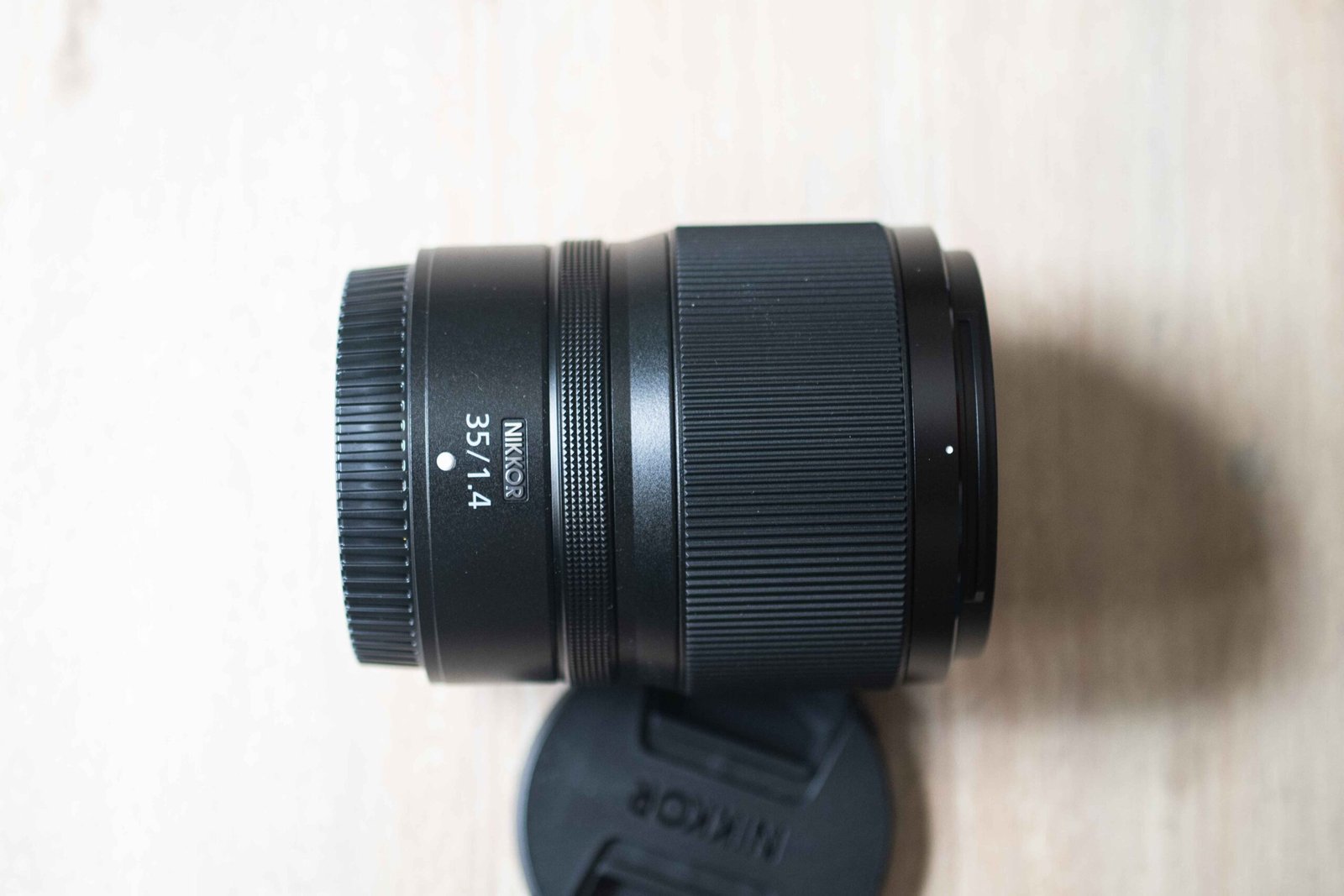
    Nikon Z 35mm f1.4 lens, top view of the control ring and focus rings

    Focusing and control ring

    The lens has 2 control rings. The larger one near the front is for focus, while the rear knurled ring is a control ring that you can customise to adjust a few settings.

    The three settings, aperture, exposure compensation and ISO are all things that I would want fast control over during a paid shoot. Personally, I set it to either aperture or ISO when I’m shooting manual, and exposure when I’m shooting A or S mode. The control ring is something I enjoy using especially compared to my Nikon Z 50mm f/1.8 S.

    Z 35mm 1.4 control ring customisations, aperture, exposure comp or ISO

    The Nikon Z 35mm 1.4 is similar to other Z mount lenses in the use of a silent, stepping motor. Autofocus is smooth during photo and video modes. You can set the AF speed in camera. I find it is fast enough for my paid event work, when I was testing the speed in focusing between near and far subjects.

    Nikon Z 35mm f1.4 view of the front element

    Nikon 35mm 1.4 Z Filter Size

    The front element is small. The lens takes a smallish 62mm filter. While I would have preferred the 67mm since I already have quite a few, if you’re buying new, the 62mm filters are not expensive.

    Image Quality from the Nikon 35mm 1.4 Z

    Shot on Z 35mm f1.4 at f/1.4, note the vignetting on the corners
    Shot on Z 35mm f1.4 at f/1.4, note the vignetting on the corners
    Shot on Z 35mm f1.4 100% crop at f/1.4
    Shot on Z 35mm f1.4 100% crop at f/1.4
    Shot on Z 35mm f1.4 at f/4.0
    Shot on Z 35mm f1.4 at f/4.0

    Vignetting on the 35mm 1.4Z

    In this shot, I was able to clearly see the vignetting in the image at f1.4. Some people might find this to be useful, especially when shooting environmental portraits.

    For landscape shooters, this is not a huge problem and lightroom solves it with a single click. To me vignetting is usually not an issue since it is easily fixed in software.

    Shot on Z 35mm f1.4 100% crop at f/4.0
    Shot on Z 35mm f1.4 100% crop at f/4.0
    Shot on Z 35mm 1.4 at 100% crop, focus on the white counterweight of the crane
    Shot on Z 35mm 1.4 at 100% crop, focus on the white counterweight of the crane
    Shot at f1.4 on the left, f4 on the right
    Shot at f1.4 on the left, f4 on the right

    Here is a side by side shot at 100%. When shooting wide open at f1.4 vs at f4, you can see a large difference in overall contrast and sharpness. Nikon wasn’t kidding with their marketing materials. I noted that Nikon stated that the lens was sharp when stopped down, with no mention about shooting wide open. To my eyes, even the 1.4 is fine.

    In a paid shoot, I would have no issues shooting the lens at any aperture. You will only see the difference in a side by side comparison wide open and stopped down to f4 or f5.6.

    Shot on Z 35mm f1.4 100% crop at f/1.4, note the chromatic aberration on the white edges of the rooftop on the right
    Shot on Z 35mm f1.4 100% crop at f/1.4, note the chromatic aberration on the white edges of the rooftop on the right
    Shot on Z 35mm f1.4 100% crop at f/5.6, there is no more chromatic aberration
    Shot on Z 35mm f1.4 100% crop at f/5.6, there is no more chromatic aberration

    Is Chromatic Abberation Present?

    Chromatic aberration to me usually is not a huge issue since it can be fixed in lightroom. Wide open, you will see purple fringing on the white edges of the rooftop on the right.

    When stopped down the f4, the fringing is no longer visible. If the 35mm 1.8S is the same as the 50mm, there is no fringing even wide open.

    But again, for my purposes, this is not a major issue since most of my paid work is indoors where the ability to shoot at 1.4 in low light is far more important than the fringing that my client may not notice.

    Shot wide open on the Z 35mm 1.4, focusing on the word Sigma
    Shot wide open on the Z 35mm 1.4, focusing on the word Sigma, purple fringing noticeable
    Shot wide open on the Z 35mm 1.4, focusing on the eyes
    Shot wide open on the Z 35mm 1.4, focusing on the eyes

    From the two sample shots above, the bokeh is smooth enough for my use. Being able to shoot wide open at 1.4 means that in most of my environmental portrait shoots, I should be able to blur out the background.

    Conclusion, do you get the Nikon Z 35mm 1.4?

    I bought this lens as a replacement for my Sigma 35mm 1.4 Art. Just based on the size and weight savings alone, as long as the Nikon Z 35mm 1.4 wasn’t a potato in terms of performance, I would have considered it a good buy. So far, in my usage, there has been no issues. I will continue to update this article as I use it in my shoots.

    It’s very rare that I buy a lens new, but Nikon has done very well with this surprising lens (in terms of price and performance). I think those who need a fast 35mm in the native Z mount will find this an excellent piece of kit to own.

    If you’re a fan of 50mm lenses, and wondering how the Z 50mm 1.8S performs, check out this article.

    If you’re a fan of the 85mm for portraits, you can read about my comparison of the Z and F mount 85mm 1.8 lenses.
  • Meike 25mm f/1.8 lens review on the Nikon Z50

    Meike 25mm f/1.8 lens review on the Nikon Z50

    When the Nikon Z50 (my thoughts here) was released in 2019, many Nikon photographers were dismayed when there were only 2 native lenses at launch and even now in 2021 there is only one more additional DX lens in the Nikon roadmap. It was then up to 3rd party lens manufacturers to fill the void, and one the players that stepped up was Meike.

    *2025 update, there are now many third party lenses from Sigma, Viltrox and TTArtisan to fill in the gap of crop sensored lenses.

    Meike launched a cheap, manual 25mm f/1.8 prime lens for the APS-C Z mount that was listed at US$99.45 at the time of writing. It then begs the question, does the lens deliver sufficient quality for use on the Nikon Z50? How is it in use?

    Is it rubbish since it is after all a cheap lens at less than a 100 USD?

    Let’s dive into these questions in this mini review.

    *This lens was bought using my own money, no one sent me a free item or paid me to do this. All views are my own.

    Lens Aesthetics and Ergonomics

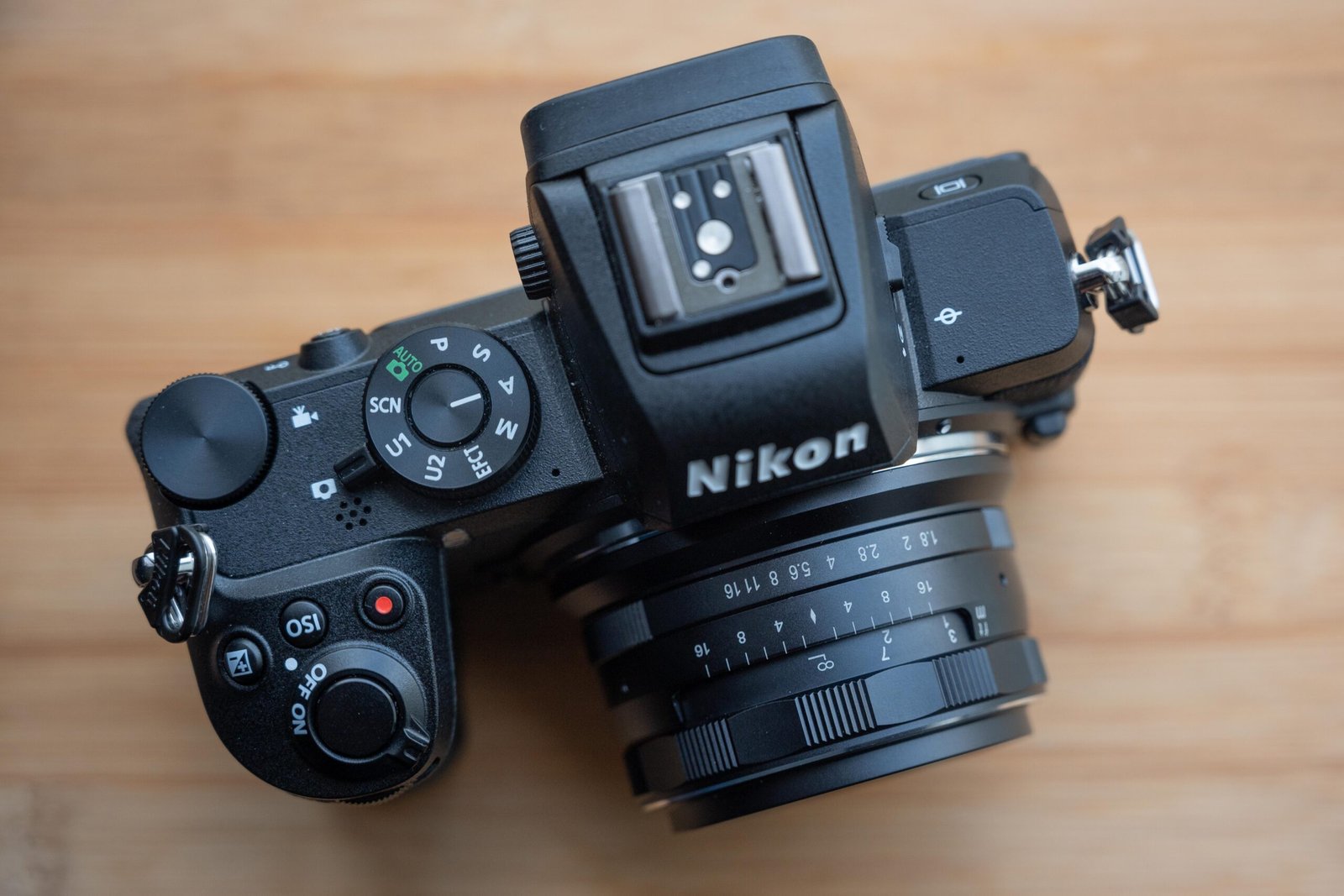
    meike 25mm on the nikon z50

    When I first handled the lens, I was pleasantly surprised at how dense and well built the lens is despite the wallet friendly price tag. Meike (įžŽį§‘) is a Hong Kong company previously known for making knock off products such as battery grips and flashes, they didn’t have a name for making pricey, premium items in the past (but their brand is now making cinelenses!).

    The feeling in hand and first impressions of the lens is definitely above my expectations.

    While I wouldn’t drop this lens for no reason to test it’s sturdiness, I can say that since this is a manual lens, it should survive impact to some degree since there are no electronics to be damaged.

    The front optical element is nestled somewhat within the front of the lens, thus negating the need for a lens hood to shield the element from side light.

    For those who may need a filter when using the lens, it uses a 49mm diameter filter, slightly bigger than the 46mm of the native Nikon 16-50mm f/3.5-6.3 lens.

    Focus and aperture ring

    meike 25mm lens in the hand, lens body

    The focus and aperture rings are both smooth, as expected from a fully manual lens.

    For video shooters especially, the de-clicked aperture ring will be a godsend when you are worried about the lens affecting the audio for your video as you are adjusting the aperture either for creative purposes or simple for exposure control.

    Focusing on the Nikon Z50 is not ideal. While I have enabled focus peaking, for critical sharpness, i still prefer a zoomed in view of the subject in order to verify that I have exact focus. This is especially if you are shooting wide open at f/1.8.

    For stationary subjects, this should not be an issue. For moving subjects in street photography for example, this would be something you might want to plan ahead for.

    Lens Mount

    meike 25mm lens in the hand, lnes rear element
    A very welcome metal lens mount

    Unlike the kit lens, this manual lens, despite being cheap, uses a metal mount. Not a big issue for both lenses since they are so light anyway, but I personally prefer metal mounts since I have seen the old nifty 50mm f/1.8 Canon lenses break at the mount.

    Image Quality from the Meike 25mm f/1.8

    Lens Sharpness

    I did several test shots using the marked apertures on the lens. The sample images below:

    meike 25mm 1.8 at f1.8
    f/1.8
    meike 25mm 1.8 at f2
    f/2
    meike 25mm 1.8 at f2.8
    f/2.8
    meike 25mm 1.8 at f4
    f/4
    meike 25mm 1.8 at f5.6
    f/5.6
    meike 25mm 1.8 at f8
    f/8
    meike 25mm 1.8 at f11
    f/11
    meike 25mm 1.8 at f16
    f/16

    Basically, while shooting the sample images, I would say that sharpness is not an issue, especially in the centre of from the frame. For best results, I would shoot at apertures of between f/2.8 to f/5.6 for maximum sharpness.

    In low light conditions, to be honest, shooting wide open is not really an issue for me. However, for landscape shooters or for people who require edge to edge sharpness, you’re barking up the wrong tree here with this lens.

    The corners are quite soft and you can really tell the difference in image sharpness when comparing it to the centre.

    image from meike 25mm showing potential field curvature
    Potential evidence of field curvature, note the floors on the centre right seems blurry even though the left side is sharp

    During one of the tests, while taking a shot at infinity and at f/4 I noticed an anomaly with my copy of the lens. It appeared that there was some field curvature or optical element misalignment.

    Normally you would expect that the image is sharp across the plane at infinity focus, but there was one patch of the image near the centre of the frame where the image is obviously soft.

    More testing is needed but I would recommend that potential buyers of the lens test if they can or check their return / exchange policies before buying.

    One might also say that I am being too picky since this is only a cheap lens, but I would say that you are paying good money for it so you should expect some degree of quality from the lens and not put up with a defect.

    Lens Vignetting

    meike-25mm-sample-bokeh
    Taken wide open at f/1.8

    As you can see from the image above, there is little or no vignetting/ light fall off on the crop sensored Z50. Even at wide open, without any correction in post, I felt that this was not an issue at all for normal usage.

    For fun, I’ve mounted the lens on the full frame Nikon Z6, here’s how it looks at f5.6
    Another shot, this time on Z6 again at f/1.8, wide open

    For those looking to try mounting the Meike 25mm 1.8 on the full frame Z cameras, unfortunately, the lens does not work well because it was not designed to fit the larger full frame sensor.

    As can be seen from the sample images above, there will be a circle when you try to shoot using the lens at no crop on the Z6 (or other full frame Z cameras).

    Flare

    Meike 25mm 1.8 Image quality check flaring

    I would say that flare is controlled in this lens. Shooting directly into a light backlighting my subject, there was only one spot of green flare to the opposite direction of the light, with some loss of contrast.

    In a real life shooting situation with the morning or evening sun backlighting your subject, I believe the loss of contrast may actually be beneficial to the overall feel of the photo.

    Bokeh

    meike 25mm taken at close up
    Close up bokeh

    Personally, I have no issues with the bokeh rendered by the lens. This was taken at near minimum distance (about 25cm).

    meike 25mm portrait, 1-2 m away
    Shot wide open on the Z50
    dsc_0154 meike 25mm portrait, 3-4m away
    again, shot wide open on the Z50, the background is about 3-4m away from the subject

    As this is a 25mm lens on an APS-C body, you would not expect extreme bokeh from it. Nevertheless, I felt that the lens will suffice for an environmental portrait lens in a pinch. You can even detect a slight circular bokeh going on here. Bokeh quality is a personal preference. I have no issues with the bokeh produced by this lens.

    Conclusion

    Meike 25mm 1.8 lens mounted on a nikon z50
    The Meike 25mm lens on the Nikon Z50, a very compact combination for street photos

    So, would I recommend the Meike 25mm f/1.8 lens as a purchase? If you are looking at the Z50 as a primary camera for some reason, and you need a cheap and easy way to get into the APS-C prime game, then this lens is a no brainer at about US$100 (cheaper used!).

    The sharpness in the centre, good performance in terms of vignetting makes this a good buy as long as you are someone who doesn’t mind taking things slow and using manual controls.

    The small, lightweight nature of the lens complements the Z50 as a travel camera as well. A wide-ish field of view at about 37.5mm full frame equivalent, bright aperture of f/1.8 will serve you well at night in your travels.

    For people needing absolute sharpness edge to edge, look elsewhere. For someone needing a cheap and cheerful lens for your Z50? A solid recommendation from me here.

    If you’re looking to pair this camera and lens set with a grip, check out my thoughts on the Smallrig Grip here.

    Personal Plug by Chris Puan

    If you found this article useful, please consider supporting me here to help pay the bills. Thanks in advance 🙂

    https://www.buymeacoffee.com/Chrispuan

  • Review: Sigma 85mm f/1.4 HSM (Non Art) on the Nikon D3 (updated 2025)

    Review: Sigma 85mm f/1.4 HSM (Non Art) on the Nikon D3 (updated 2025)

    Back in 2014, it was some time before I was able to put my paws on the gorgeous Sigma 85mm 1.4 HSM (non Art). I made the transition from using the Nikon 70-200mm f/2.8G VR (version 1 of the F mount lens) for portraiture, with the key motivation being the desire for more light (more!) and shallow depth of field (bokeh!).

    Using the Sigma 85mm f/1.4 (Non Art) with the Nikon D3

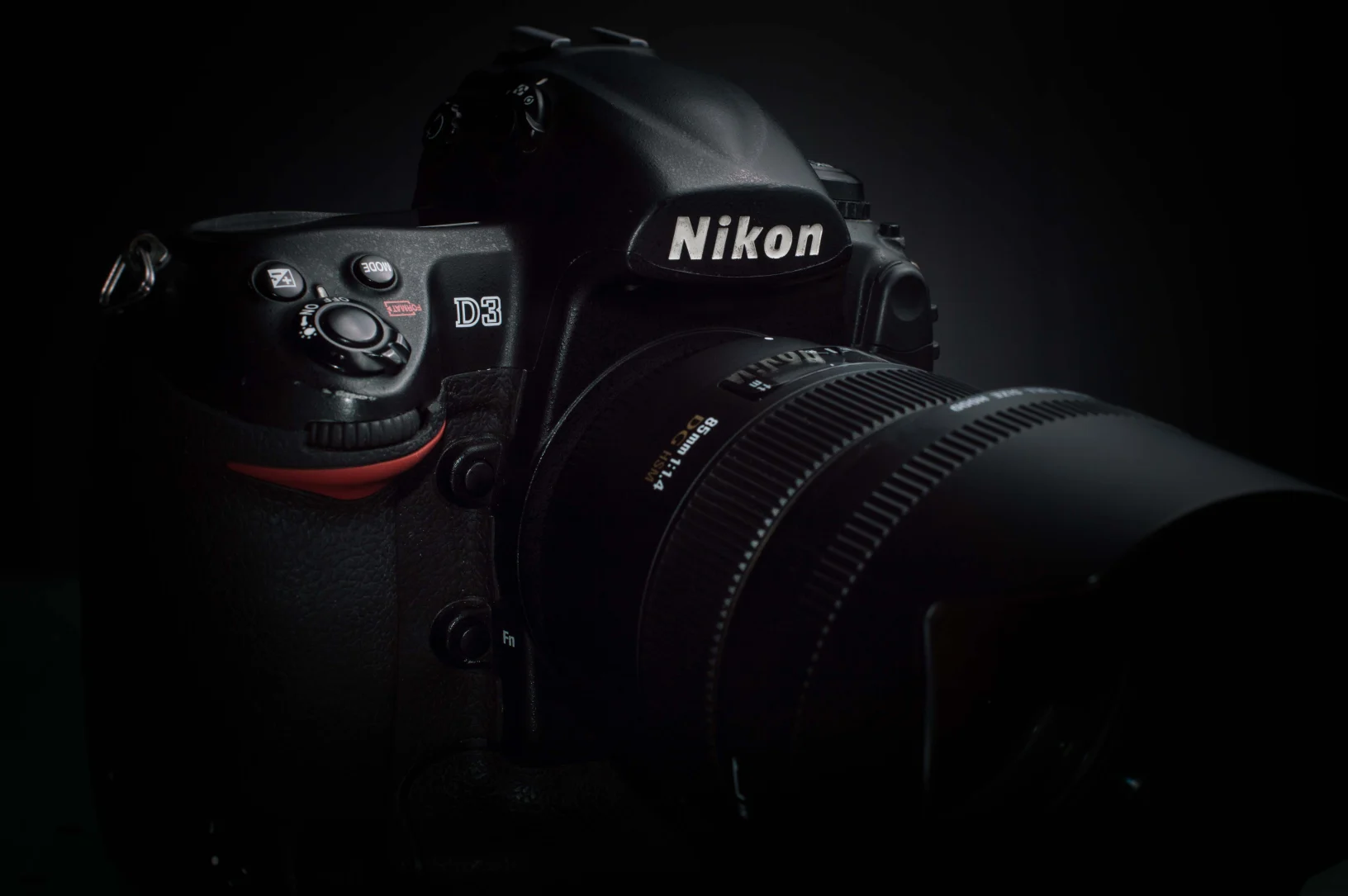
    Sigma 85mm 1.4 HSM on a Nikon D3, front view
    D3 with the Sigma 85mm f1.4 HSM mounted

    Ergonomics

    The lens feels superb on my D3, neither threatened to overwhelm the other when I carried the body by its grip using one hand (without a strap,  I might add). The lens comes with a customisable hood, the normal one for FX and an extension for DX coverage.

    Autofocus Speed

    Auto focus was fast and sure on the D3 in good light. The speed wasn’t as lightning fast as the Nikon pro grade standard zoom 24-70, but this was no slouch. Certainly faster than my Nikon 50mm f1.4G, itself akin to an old man taking a leisurely stroll to the nearby grocery store.

    Be wary of sample variation with AF accuracy, as I found my copy to have slight front focusing. I managed to remedy the issue with -5 AF fine tune on my D3 (most of the professional grade DSLRs from Nikon offered this). This is something to note for users of bodies without the AF fine tune.

    image shot on Sigma 85mm 1.4 on a Nikon D3, check the Bokeh
    Critical focus has been missed, or rather, the DOF is so thin that the clothes are in focus rather than the face. Take note of any front or back focusing issues.

    Image Quality on the Sigma 85mm 1.4 (Non Art)

    Image quality is pretty good, I have no complaints with sharpness on my D3. Granted, the corners maybe lacking, but for its primary usage, ie. portraiture, this should not be an issue.

    When checking focus using the Centre button magnification function, I found the lens to be sharper than the Nikon AFS 50mm 1.4G when both are wide open.

    image shot on Sigma 85mm 1.4 on a Nikon D3, check the Bokeh
    D3 with the 85mm, shot wide open. Focus is on the face.
    AF Array on the D700, D3 and others

    The lens works well on bodies with the CAM3500 AF module (Dx class bodies, D700, D800/e, D7100 and D3xx) as the wide spread of AF points mean that there is less need for focus and re-composition, something which may result in slightly off focus photos, exacerbated by the thin depth of field at 1.4.

    That is not to say this lens doesn’t work well on lower end bodies. I have used it on my D3200 in order to maximize 24MP of goodness. 🙂

    Conclusion

    This is a lens I would recommend for anybody looking past the fact that its a non Nikon lens and go for it.

    In Singapore, this lens can be had for SGD $400 pre-loved. Prices have really plunged after the Sigma Art Series were released, compared to about $700 in the past.

    Sigma EX 85mm 1.4 in Jul 2025

    If you are on a budget and am not a pixel peeper, do check out the AF Nikkor 85mm 1.8d at about SG$280 or the Nikon AFS 85mm 1.8G at about SG$299 (check pictures below for pricing indication in 2025).

    Nikon AF-D 85mm at S$280 in Jul 2025
    Nikon AFS 85mm 1.8G at S$299 in Jul 2025

    Your choice will depend on whether your camera body has the built in screw drive mechanism to drive the auto focus.

    Happy shopping and shooting!