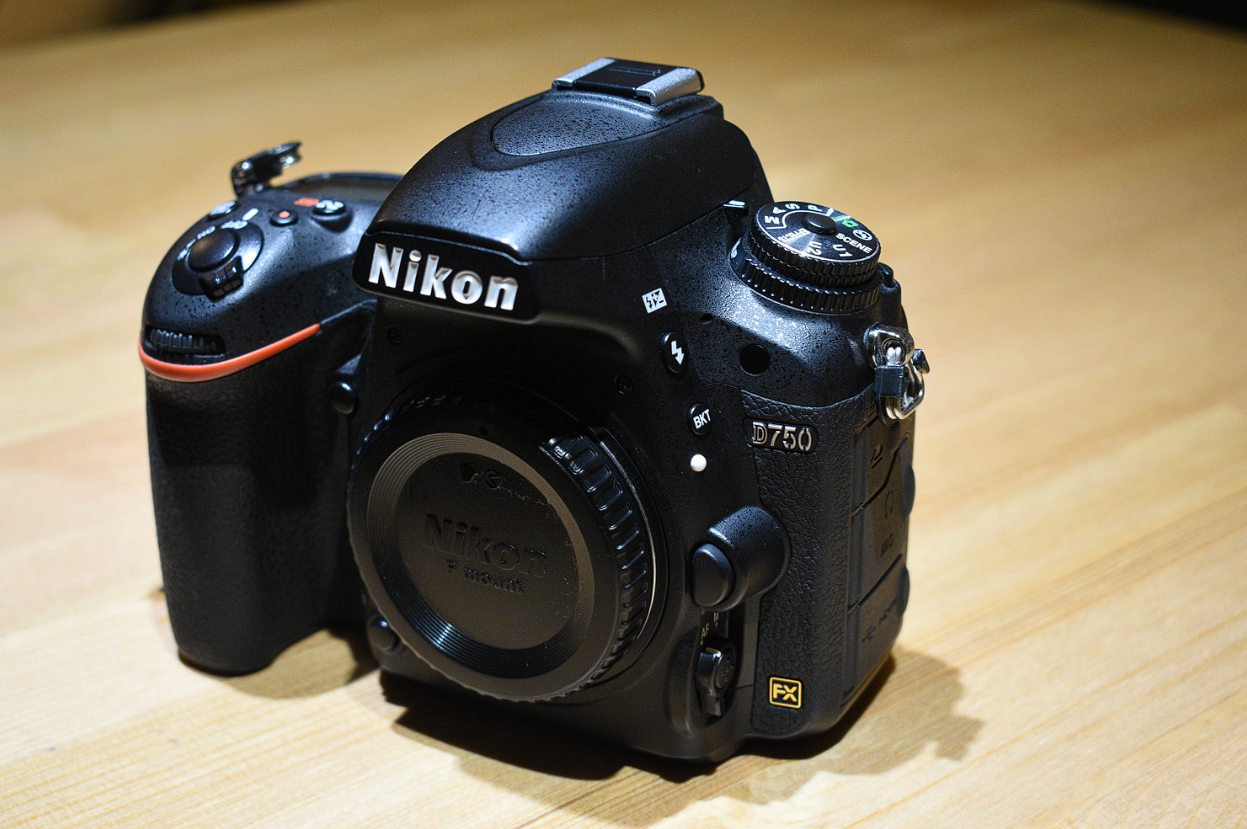

The Nikon D750 released to great fanfare in 2014 due to the long delay with releasing a proper Nikon D700 replacement. There had not been a light (small body) full frame with similar capabilities to the current flagship bodies as had the D700 been to the D3.
I was thrilled to be able to purchase one a year ago as I had already “poisoned” myself into buying one some time back. It was meant to be used alongside my D3S, replacing the D610 that I had been using previously.
After having used it for more than 2 years (and more than 25k shutter actuations later through events, portrait shoots and birding), I feel that I can comment properly on it from both an enthusiast grade photographer and a freelancer.
Note: I have already moved on to the Nikon Z system and these opinions were from the past.
Ergonomics
Grip
Those who dabble regularly in event photography, or anybody who has to hold on to a DSLR for a long period will appreciate the relatively light camera body (compared to a conventional Full-frame DSLR). This, coupled with the excellent grip, allows for great ergonomics.
Personally, having used it with long lenses (70-200mm, Nikon AF-S 300mm f/4D), I feel that the grip will definitely please the user.

The introduction of a tilting LCD monitor was truly a boon for myself. Having used the D3 and the D700 extensively, sometimes, I yearn for an easy way to get shots from unusual angles without having to contort my ageing body into strange positions or adopt un-glamourous positions in public.
One personal anecdote was during a photowalk with other photo enthusiasts, I could get a ground level shot of a cat (yes, another cat photo adding to the billions already out there) simply by tilting the screen and shooting.
The other photographers (using Leicas I might add) had to make do with guesswork or viewing the LCD from an awkward angle.
One concern was durability, since dropping it from an open position with the screen out will likely lead to severe damage. In that case, I recommend being disciplined and always storing the monitor after use.
Speed (FPS)
In an era of blazing fast cameras, the 6.5FPS of the D750 might seem paltry. Nevertheless, the speed is just enough for simple sports and action photography. Ideally, you should be timing your shot instead of spraying and praying anyway. Saves on your time deleting the shots you don’t want 🙂
I use it when birding and shooting some simple dance festivals in Japan. Nothing hardcore but most people buying this probably won’t need anything particularly powerful.
If you do, the Nikon D500 will suit you better.

Some people may felt that the mode dial on the D750 is a prosumer dial instead of the pro grade dial on the D800 series. I feel that it is a matter of personal preference, since I do prefer the added user friendliness of the U1 and U2 modes. It’s easy to use in my opinion. For events, I set them to match the ambient light (U1) and to match my flash settings (U2) respectively.
Nikon D750 Autofocus
AF Point spread

One of the complaints of the D610 was the CAM4800 Autofocus seemingly brought in wholesale from the D7000 without being adjusted for the full frame coverage.
The CAM 3500 AF system in the D750 sort of fixes this with a larger number of AF points (51 points) but one might still miss the larger spread as seen on the D3 series and the D800 series (I may be wrong about the similarities between the two).
For reference, please check the excellent comparison table from: https://nikonrumors.com/2014/10/20/nikon-confirms-the-51-af-points-in-the-d750-are-narrower-compared-to-the-d810.aspx/
Still, the amount of AF point spread should suffice except for the most extreme of photo composers (in which case centre-point focus-recompose might deliver great mileage.)
Autofocus speed
The AF speed is sufficient for most purposes, even for light sporting events. I was fortunate to cover a sports event using this and with some prediction of events, I was able to get some decent shots.
Also, as you can expect, the tested and proven 3D tracking system has worked its magic in many situations such that many photographer swear by it. For the beginner, putting the initial AF point on the subject and then allowing the camera to track the subject will result in the camera automatically following the subject.
As a caveat, the AF accuracy is dependent on lens calibration and compatibility. I have had no issues with most lenses that cannot be resolved with a tweak of the AF calibration settings.
Nikon D750 Lens compatibility
The D750, with its screw drive autofocus system, will drive the AF gears of my AF-D lenses with no issue.
There appears to be no problems with mounting old lenses (AI/ AIS) as well except for the lack of optimisation due to old lens designs and coatings (ie you cannot expect sharpness and flare performance of comparable to modern lens designs)
For reference, check the Nikon USA link.
Sensor and Image Quality on the Nikon D750
Resolution
24 megapixels will suffice for most purposes. You can get a decent amount of detail yet not have to worry about huge files clogging up your hard drive. The megapixel war that’s happening nowadays (seemingly still going on in 2025) is making disk space capacity a problem for many photographers. The quality of the image will most likely be decided by the lens you choose rather than the sensor itself.
ISO invariance
The concept of ISO invariance started when the Nikon D800, with its then incredible sensor, was release. One could shoot at ISO 100 and from a near black photo uncover an astounding amount of details from the shadows.
Continuing the trend, the D750 is not slouch in this area. It has huge amounts of details in the shadow areas when shot at ISO 100. The implication is that you could shoot at low ISOs to maintain the maximum possible dynamic range. In my experience, you can shoot in raw and push the exposure by 5 stops in the raw processor.
Simply magnificent.
Landscape photographers will love this camera for this.
Video on the Nikon D750
The powered aperture makes an appearance again, very much welcome by videographers. Nowadays, people take this for granted, but this feature was something the broke free from the usual Nikon crippling of their cameras in the past (pre-mirrorless) by not being able to switch apertures of G lenses while recording.
The tiling screen is especially useful. I usually take videos at waist level with my arms cradling the camera in a stable position.
Conclusion
Is it still a good buy now in 2026?
Sure, why not.
This is despite newer bodies being introduced that has taken the shine off the older models. This in no way renders the D750 an obsolete model since it can still take outstanding pictures (at 24MP) and videos (albeit FHD instead of 4K). Another plus is that old AF-D lenses with the screw drive AF mechanism can be used with no issues (perfect for those on a budget!)

If you can score unit pre-loved for a good price in 2026(currently SG$750 onwards), go for it and don’t look back. The D750 is a trusty camera that will serve you well.
I also talk about Z mount cameras like the Nikon Z50.
I used a the Sigma 85mm 1.4 in the past on this camera as well.
Personal Plug by Chris Puan
If you enjoy my blog content, please consider supporting the website by buying me a coffee here. Thanks for your support! 😀
Leave a Reply