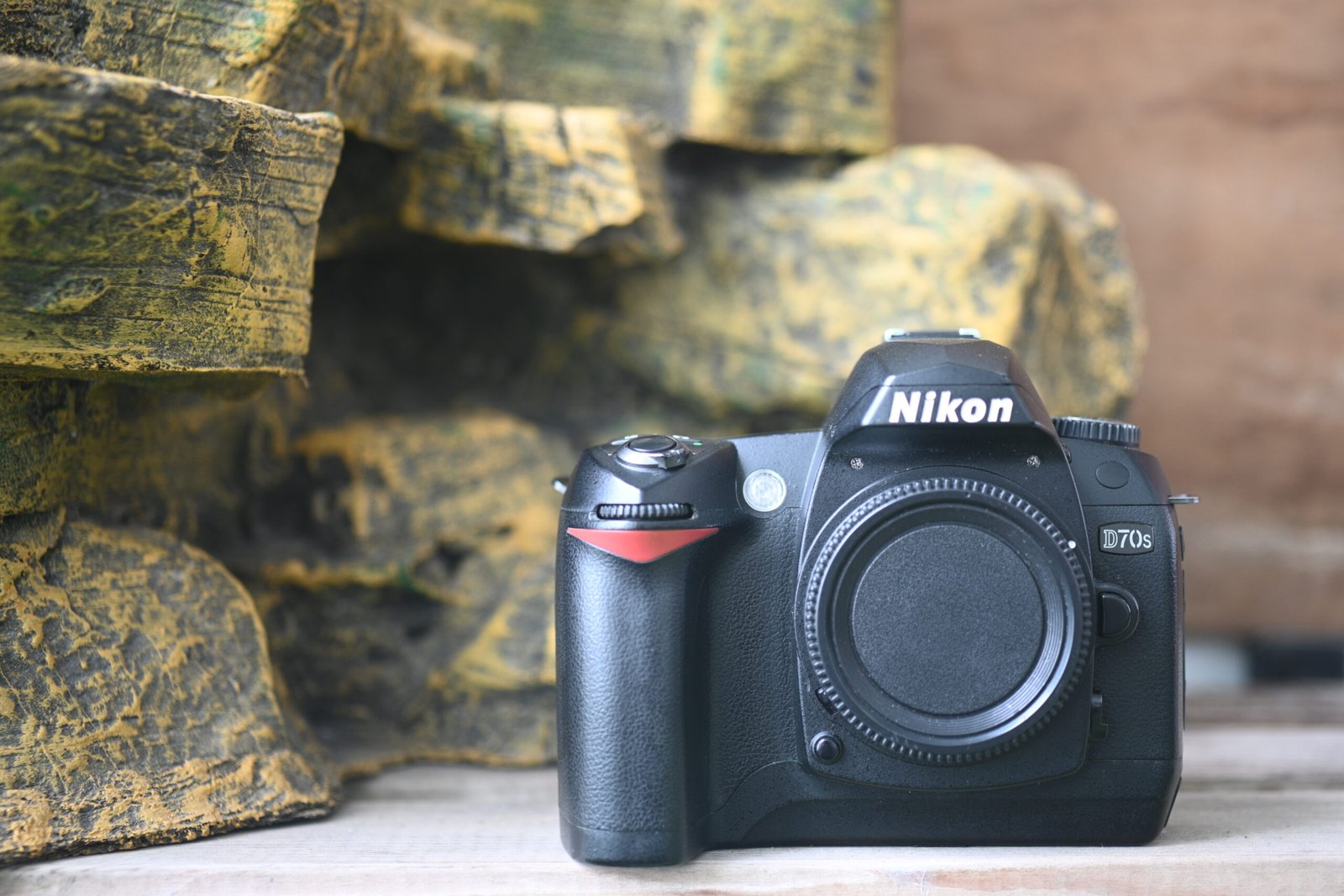
Like the Nikon D40, the D70 features a 6.1-megapixel CCD sensor. While the D40 is often praised for its “magic” colors, the D70 uses a very similar sensor but with a slightly different internal processing engine.
Images from the same 6.1 MP Sensor
Color and Texture

The D70’s images have a certain “grit” and character that modern CMOS sensors lack. At ISO 200, the colors are deep and saturated. There’s a specific way the D70 renders skin tones and natural greens that feels very “Kodachrome.”


One thing to note: the D70 has a relatively weak anti-aliasing (AA) filter. This means the images are surprisingly sharp for only 6 megapixels, but you might occasionally see some moiré patterns on fine textures like fabrics. Personally, I’ll take the extra sharpness any day.

The “Green” Cast?
Some people complain that the D70 has a slight green or cool cast to its images. I don’t think it is an issue but can be easily fixed by setting a custom white balance or shooting in RAW (NEF) and tweaking it in Lightroom or your preferred editing software. Once you dial it in, the files are beautiful.
The Secret Weapon: 1/8000s Shutter and 1/500s Flash Sync

This is where the D70 absolutely destroys almost every modern entry-level camera.
The Hybrid Shutter
The D70 uses a hybrid electronic/mechanical shutter. This allows it to reach a top shutter speed of 1/8000th of a second. Most modern entry-level DSLRs and mirrorless cameras are limited to 1/4000s. This is a huge advantage when you’re shooting wide open with a fast prime lens (like the 50mm f/1.8D) in the bright Singapore sun.
The Strobist’s Dream
Even better is the flash sync speed. Officially, it’s 1/500s. But because of the electronic shutter, you can actually “hack” it to sync with non-dedicated flashes at even higher speeds (up to 1/8000s if you use a simple trigger!).
The pop up flash itself can be used as a trigger for external flashes if you don’t want to carry another item on your shoot. Otherwise, it works fine for night shots and other situations where you just need a little more light in your shots, like a backlit subject or night time.
Ergonomics: A “Real” Camera in Your Hands

Unlike the Nikon D40 or D5000, the D70 feels like a professional tool. It has two command dials (one for aperture, one for shutter speed), a top-panel LCD, and a solid, chunky grip.
Handling
If you have larger hands, you will love the D70. It feels substantial. The button layout is intuitive, and you don’t have to dive into menus to change your basic settings.

The biggest downside? The rear LCD screen. At 1.8 inches and 130k dots, it is tiny and very low resolution. It’s basically only good for checking your histogram and making sure you didn’t leave the lens cap on. You have to trust your skills and wait until you get home to see if you nailed the shot.

The back of the camera also has the CF card slot. Take note, NOT CFexpress, the old CF card. You may or may not have the card reader, likely not if this is your first ever DSLR.
The Internal Focus Motor

Unlike the cheaper D40/D60/D3000/D5000 series, the D70 has a built-in focus motor. This means it will autofocus with older AF and AF-D lenses. This opens up a world of incredibly sharp and affordable vintage glass, like the legendary 85mm f/1.8D or the 24mm f/2.8D.
Nikon D70 in 2025: Who is it for?
Is the Nikon D70 still a good buy in 2025?
Yes, if:
•You are a “Strobist”: You want that high-speed flash sync for outdoor portraits.
•You have a collection of AF-D lenses: You need a cheap body that can actually autofocus them.
•You want a “Pro” feel on a “Peanuts” budget: Two command dials and a top LCD for under SG$100 is unbeatable.
•You love the CCD look: It’s one of the cheapest ways to get that specific color science.
No, if:
•You rely on the LCD screen: It’s borderline useless for judging image quality.
•You need high ISO: Anything above ISO 800 is noisy.
•You need a compact camera: It’s much bulkier than a D40 or a modern mirrorless.
•You use SD cards: The D70 uses CompactFlash (CF) cards, which are becoming harder to find and require a separate reader.
Conclusion
The Nikon D70 is a beast. It’s a 20-year-old workhorse that still has a lot to offer the modern photographer. It forces you to slow down, trust your settings, and focus on the light.
If you can find one that isn’t “sticky” (the rubber coating on old Nikons often degrades, a bit of alcohol wipes can fix this!), grab it. It’s a fantastic way to experience a “pro” style DSLR for less than the cost of a memory card.
I also talk about its newer brothers, the Nikon D100, the Nikon D200, the D300s and the much more “modern” Nikon D7000.
Leave a Reply